What Is a Digital Business?
A digital business is a business in which a significant part of creating value, marketing, selling products or services, delivering services, or communicating with customers is powered by digital technologies.
The concept is much broader than simply running an online store.
Examples of digital businesses include:
- E-commerce stores
- Web development companies
- Digital marketing agencies
- Online education businesses
- Digital product stores
- SaaS platforms
- Marketplaces
- Content businesses
- Online consulting
- AI-powered services
- Mobile applications
- Specialized websites and media platforms
- Online tools
- Freelancing and professional digital services
For many of these businesses, the internet is not simply an advertising channel. It is an essential part of the product, service, or business infrastructure.
Main Types of Digital Businesses
To make choosing the right business easier, digital businesses can be divided into several major categories.
1. E-commerce and Physical Product Businesses
This is the business model most people think of when they hear the term "online business."
In this model, a company sells physical products through a website, social media platforms, marketplaces, or a combination of these channels.
Examples include:
- Clothing
- Consumer electronics
- Beauty products
- Home products
- Handmade goods
- Specialized niche products
Advantages
- Large potential market
- Strong potential for brand building
- Repeat purchases
- SEO and advertising opportunities
- Ability to build an independent online store
Disadvantages
- Requires inventory investment
- Warehousing
- Shipping
- Returns
- Customer support
- Strong competition
- Potentially lower profit margins in highly competitive markets
Example
Imagine starting a specialized store for home-office equipment instead of creating another general electronics store.
Your market may be smaller, but you can build a more specialized brand and target a clearly defined audience.
2. Digital Product Businesses
Selling digital products is one of the most attractive digital business models because producing an additional copy usually requires little or no physical production cost.
Examples include:
- E-books
- Website templates
- Graphic design assets
- Fonts
- Online courses
- Resume templates
- Excel templates
- Digital tools
- Prompt libraries
- Checklists
- Industry reports
Imagine creating a professionally designed resume template.
You create it once and can potentially sell it hundreds or thousands of times.
Advantages
- Potentially high profit margins
- No physical inventory
- Instant delivery
- 24/7 sales
- Global market potential
- Highly scalable
Disadvantages
- Products can be copied
- Strong competition
- Requires marketing
- Requires trust and authority
- Some simple digital products are becoming less valuable because AI can create similar products quickly
This last point is particularly important in 2026.
If AI can create the same basic product in a few minutes, simply selling a generic digital file is no longer a strong competitive advantage.
Your product needs to provide expertise, experience, proprietary data, better design, or measurable value.
3. Digital Service Businesses
One of the easiest ways to start a digital business is by selling a service.
Instead of creating a physical or digital product, you sell your skills and expertise.
Examples include:
- Web development
- SEO
- Digital marketing
- Graphic design
- Video editing
- Content creation
- Software development
- Social media management
- Business consulting
- AI services
This model is particularly attractive for people with limited startup capital.
Advantages
- Low initial investment
- Can start as a freelancer
- Can work remotely
- Fast to launch
- Can serve international clients
- Can eventually become an agency
Disadvantages
- Time-dependent income
- Requires valuable skills
- Finding clients can be difficult
- High competition
- Limited scalability in a traditional freelance model
For example, suppose you build websites and charge $1,500 per project.
Your income is directly connected to the number of projects you can complete.
But if you eventually build a team, standardize your processes, and package your services, you can turn a freelance activity into a scalable digital business.
4. SaaS: Software as a Service
SaaS is one of the most attractive digital business models.
In this model, you build software and customers usually pay a monthly or annual subscription to use it.
Examples include software for:
- Accounting
- Customer relationship management
- Project management
- Email marketing
- Data analytics
- Social media management
- Content creation
Advantages
- Recurring revenue
- High scalability
- Global market potential
- Potentially high business value
- Opportunities for automation
Disadvantages
- Development costs
- Customer support requirements
- Infrastructure costs
- Strong competition
- Customer churn
- Continuous product development
SaaS has significant growth potential, but it is usually much harder for a complete beginner than starting with a service business.
5. AI-Powered Digital Businesses
This may be the most important new category in the future of digital business.
Artificial intelligence is no longer simply a tool for generating text or images.
AI can now be integrated into areas such as:
- Customer support
- Sales
- Data analysis
- Content creation
- Market research
- Business automation
- Lead qualification
- Document processing
- Software development
- Reporting
- Personalization
More importantly, the new generation of AI agents can perform multiple steps of a business process with limited human intervention.
For example, imagine a company receiving dozens of pricing requests every day.
An AI-powered system could:
- Receive the customer's message.
- Identify the customer's needs.
- Retrieve relevant information from internal systems.
- Prepare an initial response.
- Categorize the lead.
- Send qualified leads to a sales representative.
In this scenario, AI is not simply generating content.
It is performing part of the business operation.
6. Online Education Businesses
Online education is an established but still important digital business model.
You can monetize your expertise through:
- Online courses
- Webinars
- Memberships
- Coaching
- Consulting
- E-books
- Podcasts
- Specialized communities
Advantages
- Low initial investment
- Products can be sold repeatedly
- Strong potential for personal branding
- Global market opportunities
- Can be combined with AI
Disadvantages
- Requires credibility
- Strong competition
- Building trust can take time
- Content can be copied
- Requires continuous marketing
General educational content may face increasing pressure from AI-powered learning tools.
However, specialized, experience-based and outcome-oriented education can remain highly valuable.
7. Digital Marketplaces and Platforms
In a marketplace model, you do not necessarily provide the product or service yourself.
Instead, you connect buyers and sellers.
Examples include:
- Platforms for professional services
- Specialized product marketplaces
- Booking platforms
- Education marketplaces
- B2B marketplaces
Revenue can come from commissions, subscriptions, advertising, or additional services.
The Main Advantage
Successful platforms can create a network effect.
As more buyers and sellers join the platform, the platform becomes more valuable to other participants.
The Main Challenge
Starting a marketplace is difficult because you need both sides of the market.
At the beginning, you have few sellers and few buyers.
This is commonly known as the cold-start problem.
How Will AI Change the Future of Digital Businesses?
Artificial intelligence will likely be one of the most important forces shaping digital businesses over the next several years.
But there is an important distinction:
AI itself is not automatically a business.
Building a chatbot or generating images with AI does not automatically create a sustainable business model.
Real value is created when AI solves a genuine problem faster, cheaper, or better.
1. AI Will Reduce the Cost of Starting a Business
In the past, a small digital business might have needed a designer, writer, developer, analyst, and customer support employee.
Today, many of these activities can be accelerated with AI.
This allows more people to experiment with new businesses.
But there is another consequence:
Competition increases.
If everyone can generate content, then content generation itself is no longer a strong competitive advantage.
2. Small Businesses Will Operate With Smaller Digital Teams
AI can allow a small business to operate with a much smaller team.
For example, a two- or three-person company can use AI for:
- Content drafts
- Data analysis
- Initial customer responses
- Market research
- Idea generation
- Software development
- Reporting
This does not necessarily mean humans will disappear.
Instead, human work will increasingly focus on strategy, decision-making, creativity, quality control, expertise, and customer relationships.
The World Economic Forum's Future of Jobs Report 2025 also highlights the growing importance of technology skills such as AI, big data and cybersecurity alongside human skills such as creative thinking, resilience and collaboration. World Economic Forum — Future of Jobs Report 2025
3. AI Agents Will Become Part of Business Operations
One of the most important changes ahead is the transition from:
AI as a tool → AI as a digital worker
For example:
An e-commerce company could use an AI customer-support agent.
A service company could use an AI sales agent.
A marketing team could use an AI analytics agent.
A software company could use AI agents for testing and code review.
According to McKinsey's research, 62% of organizations surveyed in 2025 were already experimenting with AI agents, although most were still in the early experimentation or pilot phase. McKinsey — The State of AI
This suggests that the market is still in an early stage.
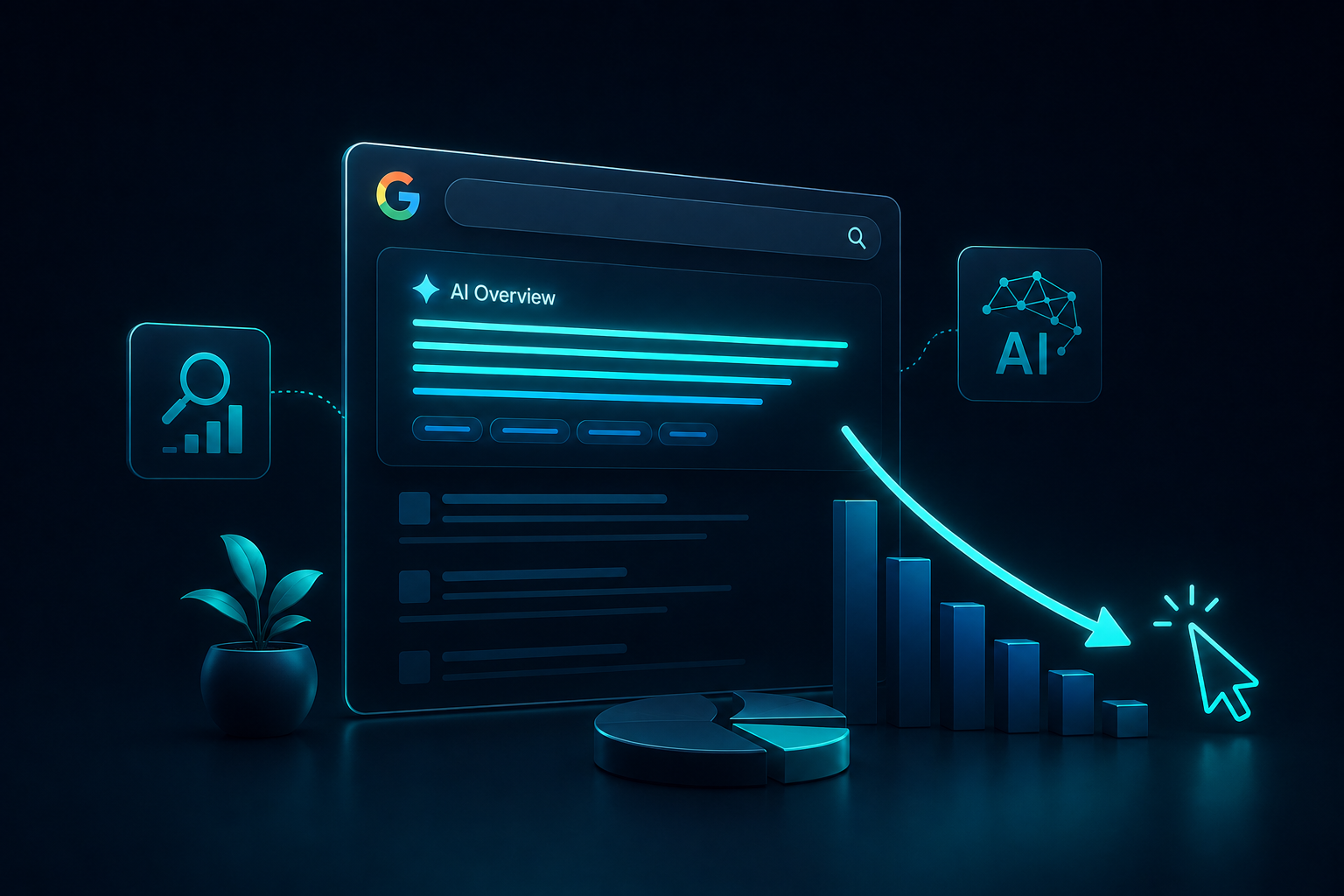
4. Search Is Changing Too
For years, businesses have focused on ranking at the top of Google.
SEO remains important, but the way people discover information is changing.
Instead of visiting several search results, users may increasingly ask AI-powered search engines or digital assistants for direct answers.
As a result, future businesses should not simply create content for search engines.
They need to become trusted authorities in their niche.
That means:
- Publishing specialized content
- Providing original information
- Building credibility
- Using real examples and experience
- Maintaining strong technical SEO
- Creating a trustworthy brand
Advantages of Digital Businesses
Digital businesses offer several major advantages.
Lower Startup Costs
Many digital businesses can be launched without renting an office or physical store.
Larger Markets
A physical store may serve customers in a limited geographic area.
An online business can potentially reach customers across cities and countries.
Scalability
A digital product can potentially be sold thousands of times without physically producing another unit for every customer.
Flexibility
Many digital businesses can operate remotely.
Automation
Sales, marketing, customer support and administrative processes can often be automated.
Access to Data
Digital businesses can collect valuable information about customer behavior and use it to make better decisions.
Disadvantages and Challenges of Digital Businesses
Despite these advantages, digital entrepreneurship is not easy or risk-free.
Intense Competition
Because entering digital markets is easier, more competitors can enter the market.
Platform Dependency
If all of your customers come from one social media platform or marketplace, an algorithm change can seriously affect your business.
Trust
Customers cannot always physically inspect a product or meet a service provider before buying.
Trust-building is therefore extremely important.
Rapid Technology Changes
A technology that creates a competitive advantage today may become a standard feature tomorrow.
Security and Privacy
The more customer data a business collects, the greater its responsibility to protect that information.
AI Dependency
If your entire business advantage depends on one AI platform, changes in pricing, APIs, policies, or capabilities can create significant risks.
What Is the Best Digital Business to Start in 2026?
There is no universal answer.
However, if we consider the situation of a beginner, we can evaluate business models based on several criteria:
- Low initial investment
- Fast launch
- Real market demand
- Ability to generate revenue
- AI compatibility
- Growth potential
- Limited dependence on a single platform
- Ability to become a larger business
Based on these criteria, one of the most practical choices in 2026 is:
Specialized Digital Services + AI
Instead of saying:
“I provide content writing.”
You could say:
“I build AI-powered content and marketing systems for businesses in a specific industry.”
Instead of:
“I build websites.”
You could say:
“I build fast, SEO-focused websites with AI automation for businesses in a specific niche.”
This distinction is extremely important.
Why Is This Model Worth Considering?
Because it does not require a large amount of capital to get started.
Imagine someone who already knows web development.
They can initially offer website development.
Then they can learn SEO.
Then they can add AI automation.
Then they can specialize in a specific industry.
For example:
- Clinics
- Construction companies
- Specialized e-commerce stores
- Educational institutions
- B2B companies
Eventually, repetitive processes can be turned into products.
The business can evolve through a path such as:
Freelancer → Specialist → Agency → Productized Service → SaaS
For many entrepreneurs, this can be less risky than trying to build a large SaaS product from day one because you first work with real customers and discover real market problems.
What Is the Best Market to Enter?
Instead of choosing a market simply because it is trending, look for three characteristics:
A real problem + ability to pay + access to customers
B2B markets can be particularly interesting.
Why?
Because if your service helps a company generate more leads, save time, reduce costs, or increase revenue, it becomes easier to demonstrate the financial value of your service.
For example:
Healthcare and Clinics
Potential services:
- Website development
- SEO
- Online booking
- AI-powered initial support
- Content creation
- CRM
- Automation
Education
Potential services:
- Educational websites
- Course platforms
- AI-assisted content creation
- Membership systems
- Sales automation
- SEO
B2B Companies
Potential services:
- Website development
- Lead generation
- SEO
- Sales automation
- CRM
- AI chatbots
- Customer analytics
What Types of Digital Businesses Are Likely to Grow in the Future?
Instead of trying to predict one specific industry or brand, it is more useful to understand the characteristics of future-proof digital businesses.
Successful digital businesses will likely have several of these characteristics.
1. They Are AI-Native
AI is not simply added later. It is integrated into the business model and operations from the beginning.
2. They Own Valuable Data
They have customer data, behavioral data, market intelligence, or proprietary industry knowledge.
3. They Solve a Specific Problem
Generic products can often be replaced easily.
4. They Build a Brand
When dozens of competitors offer similar products, trust and brand recognition become increasingly important.
5. They Own Their Customer Channels
Relying entirely on Instagram, Google, or a marketplace creates significant risk.
Having a website, email list, CRM and customer database gives the business greater control.
What Businesses Should You Avoid Starting Just Because They Are Trending?
One common mistake in 2026 is seeing a new technology and immediately deciding to build a business around it.
For example:
“AI is growing, so I should build a chatbot.”
The problem is that a chatbot alone is not necessarily a competitive advantage.
If a competitor can reproduce your product in a few days, you may not have a sustainable business.
Instead of selling the technology, sell the outcome.
Bad positioning:
AI Chatbot
Better positioning:
AI-powered customer support that reduces response times for service businesses
The first is a technology.
The second solves a specific business problem.
A Practical Example of Starting a Digital Business
Imagine you are 25 years old, have limited capital, and are interested in web development and AI.
Instead of creating a general website called "Digital Services," choose a specific market.
For example:
Web Development and AI Automation for Clinics
Your services could include:
- Website development
- SEO
- Online booking
- AI-powered FAQ support
- Specialized content creation
- CRM integrations
- Lead reporting
Now you are no longer simply a "web designer."
You solve specific problems for a specific market.
After working with several clients, you will discover which problems they have in common.
Those repeated problems can become the foundation for your next product.
Will AI Replace Humans in Digital Businesses?
One of the biggest concerns surrounding AI is whether artificial intelligence will eliminate human roles in business.
The simple answer is:
Some tasks will disappear or become much cheaper, but human value will not disappear entirely.
The World Economic Forum's Future of Jobs Report 2025 projects that around 170 million jobs could be created globally by 2030, while around 92 million jobs could be displaced, resulting in a net increase of approximately 78 million jobs. World Economic Forum — Future of Jobs Report 2025
This suggests that the labor market is likely to transform rather than simply disappear.
Skills such as creative thinking, problem-solving, communication, leadership, decision-making and industry expertise are likely to remain highly valuable.
The future therefore does not belong to people who compete against AI.
It belongs to people who know how to work better with AI.
The Future of Digital Business: Final Thoughts
Digital business in 2026 is no longer simply about having an online store or a social media page.
The ecosystem includes a wide range of models:
- E-commerce
- Digital products
- Professional services
- Online education
- SaaS
- Marketplaces
- Content businesses
- Mobile applications
- AI-powered businesses
- Automation and B2B services
AI has made it easier for many people to enter the digital economy, but it has also increased competition.
Generic content, basic design work and many repetitive tasks will become less valuable because AI can perform them quickly and cheaply.
At the same time, expertise, brand, proprietary data, market knowledge, customer relationships and problem-solving ability will become increasingly valuable.
If we were starting a new digital business today, the goal should not simply be to find the "hottest business idea."
Instead, choose a specific market, identify a real problem, and use technology and AI to solve that problem better than competitors.
For a beginner, specialized digital services combined with AI can be one of the most practical ways to get started.
A possible path looks like this:
One skill → One niche → Real customers → Identify repeated problems → Standardize the service → Automate → Build a product
This approach can gradually transform a freelancer into the owner of a scalable digital business.
And perhaps the most important lesson is this:
The future of digital business does not belong to people who simply have more tools. It belongs to people who know which problems those tools should solve.